Table of contents
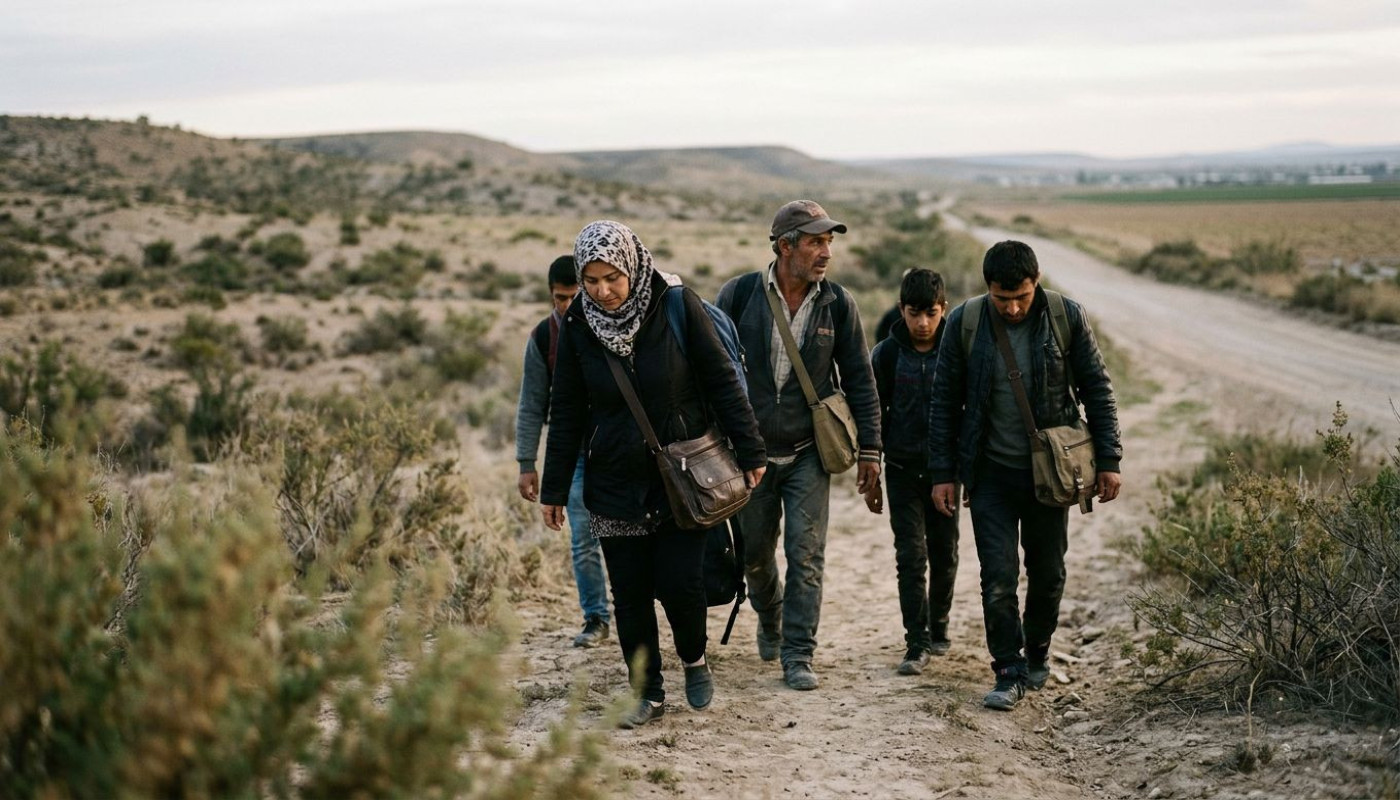
They cross borders quietly, often without passports, visas, or even a paper trail that would satisfy a census form, and in doing so they expose how migration governance still lags behind the ways people actually move. In 2024 and 2025, record displacement, tighter entry regimes, and widening inequality have intersected, pushing more journeys into informal channels. The result is a form of mobility that is easy to politicize yet hard to measure, and even harder to protect with law, services, and basic accountability.
Numbers rise, yet the picture stays blurry
How many people move “off the books”? The honest answer is that no authority can say with precision, because undocumented mobility is defined by what institutions fail to capture. Still, the data points that do exist show the pressure building. The UN Refugee Agency estimated that forced displacement reached about 120 million people worldwide by mid-2024, an all-time high driven by conflicts in Sudan and Gaza, the prolonged effects of Syria and Afghanistan, and insecurity in parts of the Sahel and the Democratic Republic of Congo. Not all displaced people cross an international border, and most are not “undocumented” in the way political debate suggests, but large-scale displacement changes the baseline: when states cannot process arrivals quickly, documentation gaps follow, and people fall into grey zones where rights are harder to claim.
On major routes, enforcement statistics offer a partial proxy. In the United States, Customs and Border Protection reported more than 2 million encounters at the southwest border in fiscal year 2023, and while numbers shifted in 2024 with policy changes and seasonality, the broader reality remained: many people attempt repeated crossings, and “encounters” are not a headcount of unique individuals. In the European Union, Frontex said detections of irregular border crossings reached roughly 380,000 in 2023, the highest since 2016, with the Central Mediterranean and Western Balkan routes prominent; in 2024, public updates continued to show sustained pressure on several corridors, although detections also fluctuate with weather, enforcement, and conflict dynamics. These are hard figures, but they are not the whole story, because many migrants never come into contact with border authorities, and others are recorded multiple times in different places.
That statistical fog is one reason undocumented mobility is so often misunderstood. A person can become “undocumented” after entering legally, for example by overstaying a visa, losing an employer sponsor, or being priced out of renewals. In many countries, visa overstay has historically represented a significant share of irregular residence, even if border images dominate the news cycle. The gap between what is visible, boats, fences, raids, and what is common, paperwork lapses, informal jobs, expired permits, shapes public perception, and it also shapes policy errors.
Visa rules tighten, work pulls anyway
What happens when economies need workers but politics demands toughness? A predictable squeeze. High-income countries are aging, and labour shortages are not an abstraction; health care, agriculture, construction, logistics, and hospitality repeatedly report unfilled posts, even during economic slowdowns. The OECD has tracked long-running demographic pressures across member states, and many governments have tried to expand selected legal channels, from care-worker recruitment to seasonal agriculture permits. Yet the same governments, facing domestic anxiety about border control and integration, often tighten asylum procedures, accelerate removals, or narrow eligibility, and the combined message is contradictory: “We need you, but not like this.” In that contradiction, undocumented mobility thrives.
Irregularity also grows in the cracks of sponsorship systems. Where residence depends on a single employer, job loss can quickly become loss of status; where renewal fees are high, delays common, or documentation requirements unrealistic, people rationally avoid official contact. Add the rise of online recruitment scams and debt-financed journeys, and the incentives shift further. The International Labour Organization has repeatedly warned that migrants in irregular situations face heightened risks of forced labour, wage theft, and unsafe work, precisely because reporting abuse can trigger detention or deportation. Employers who follow rules can be undercut by those who do not, and the result is a race to the bottom that damages both migrants and local labour standards.
Even the language of “choice” misses the point. Many migrants do make strategic decisions, weighing risk, cost, and probability, but those calculations occur under pressure: violence at home, climate shocks, debt, family obligations, and the reality that legal routes are often scarce or slow. The World Bank has documented how remittances, which topped $600 billion to low- and middle-income countries annually in recent years, function as private welfare systems in places where public services are weak. When a household’s stability depends on a wage earned abroad, waiting years for a quota slot is not a neutral option; it is a gamble with children’s schooling, medical bills, and food security.
Smugglers profit, but policies set prices
Follow the money, and the politics looks different. Smuggling networks do not operate in a vacuum; they respond to demand created by closed doors and narrow legal pathways. When entry becomes harder, prices tend to rise, routes become longer, and the market rewards groups able to handle higher risk. The UN Office on Drugs and Crime has shown, across multiple reports, that migrant smuggling is a global illicit industry shaped by enforcement intensity, geography, and the vulnerability of those on the move. Crackdowns can disrupt operations, but they can also displace routes, pushing people toward deserts, mountains, and open sea, where the death toll climbs.
The Mediterranean is the starkest illustration. The International Organization for Migration, through its Missing Migrants Project, has recorded tens of thousands of deaths and disappearances on the Mediterranean routes since 2014, a grim decade in which rescue capacity, conflict dynamics in transit countries, and EU policy choices have all mattered. Each time a safer passage is blocked, the journey does not necessarily stop; it mutates. The same pattern appears elsewhere: in the Darién Gap between Colombia and Panama, crossings surged in the early 2020s, and Panamanian authorities reported record numbers in 2023, reflecting how people reroute when visas and flights are out of reach. Geography becomes the new gatekeeper, and it does not negotiate.
Cost is not only about smugglers’ fees. It is also about documents, legal status, and the uneven value of passports. Mobility rights differ radically depending on nationality, and that inequality is measurable. Indexes such as Henley and Arton Capital consistently rank passports by visa-free access, and the spread between top-tier and low-tier documents remains vast, shaping who can board a plane and who must take a clandestine route. That market has encouraged a parallel conversation about mobility as an asset, including residency-by-investment and citizenship-by-investment schemes offered by a handful of states. Supporters argue these programs raise revenue and attract investment, critics warn about transparency and security risks, and the broader point is uncomfortable: legal mobility is increasingly stratified, and those locked out seek alternatives. For readers trying to understand how citizenship pricing is discussed online, vanuatupassportprice.net is one of the sites that illustrates the way “mobility” is marketed as a purchasable product, far from the realities faced by people who move without papers.
Living undocumented: the quiet emergency
What does “undocumented” actually mean in daily life? It often means postponing the doctor, avoiding the police even when victimized, accepting cash wages without payslips, and living with the constant risk that a routine traffic stop could end a livelihood. Research across countries shows consistent outcomes: irregular status correlates with poorer health access, higher workplace exploitation, and barriers to education for children, even where basic schooling is formally guaranteed. The fear of detection changes behaviour, and it can isolate communities, making public health and public safety goals harder to achieve for everyone, not only for migrants.
Regularization programs periodically offer a way out, and their results are mixed but instructive. Spain has repeatedly used large-scale regularizations in past decades, and more recently has relied on mechanisms tied to employment and social ties; Italy has run periodic “emersione” schemes aimed at bringing workers out of the shadow economy, especially in domestic work and agriculture. Evidence suggests that when regularization is paired with labour inspections and realistic renewals, it can increase tax compliance and reduce exploitation, but when it is narrow, slow, or politicized, it can simply reshuffle irregularity rather than resolve it. The underlying driver is structural: if legal entry and legal stay do not match labour demand and human mobility pressures, irregular status becomes a predictable output.
There is also a psychological cost rarely captured in headlines. Undocumented people often carry trauma from the journey, and then accumulate stress from living under threat of removal, and those pressures can affect children born in the destination country, who may grow up integrated in language and culture yet remain entangled in family insecurity. Schools, hospitals, and local governments become front-line responders, improvising policies on identification, billing, and data-sharing, sometimes in ways that build trust, sometimes in ways that deter access. In the absence of coherent national frameworks, local discretion can mean protection in one city and precarity in the next.
Practical ways forward, and what it costs
Governments looking for control without cruelty tend to return to the same toolkit: expand legal pathways where labour demand is real, speed up fair asylum decisions, target exploitative employers rather than only migrants, and invest in integration that pays back in productivity and social cohesion. For individuals, the practical landscape is narrower, but still concrete. If you are planning a move, budget for legal advice, certified translations, and renewal fees, and keep digital and paper copies of key documents; small administrative gaps are a common trigger of irregularity. If you are already in a precarious status, seek reputable legal aid and avoid “fixers” who promise documents for cash, because scams and identity theft are routine in this space.
Public support can matter too. Some countries fund legal assistance for asylum seekers, municipalities often support migrant information centres, and in parts of Europe and North America, employers can access guidance on ethical recruitment and compliance. The most useful step is often the least dramatic: book an appointment early, track deadlines, and build a realistic cost plan, because irregularity frequently begins as an administrative slide rather than a single decision to “go underground.”
Similar articles